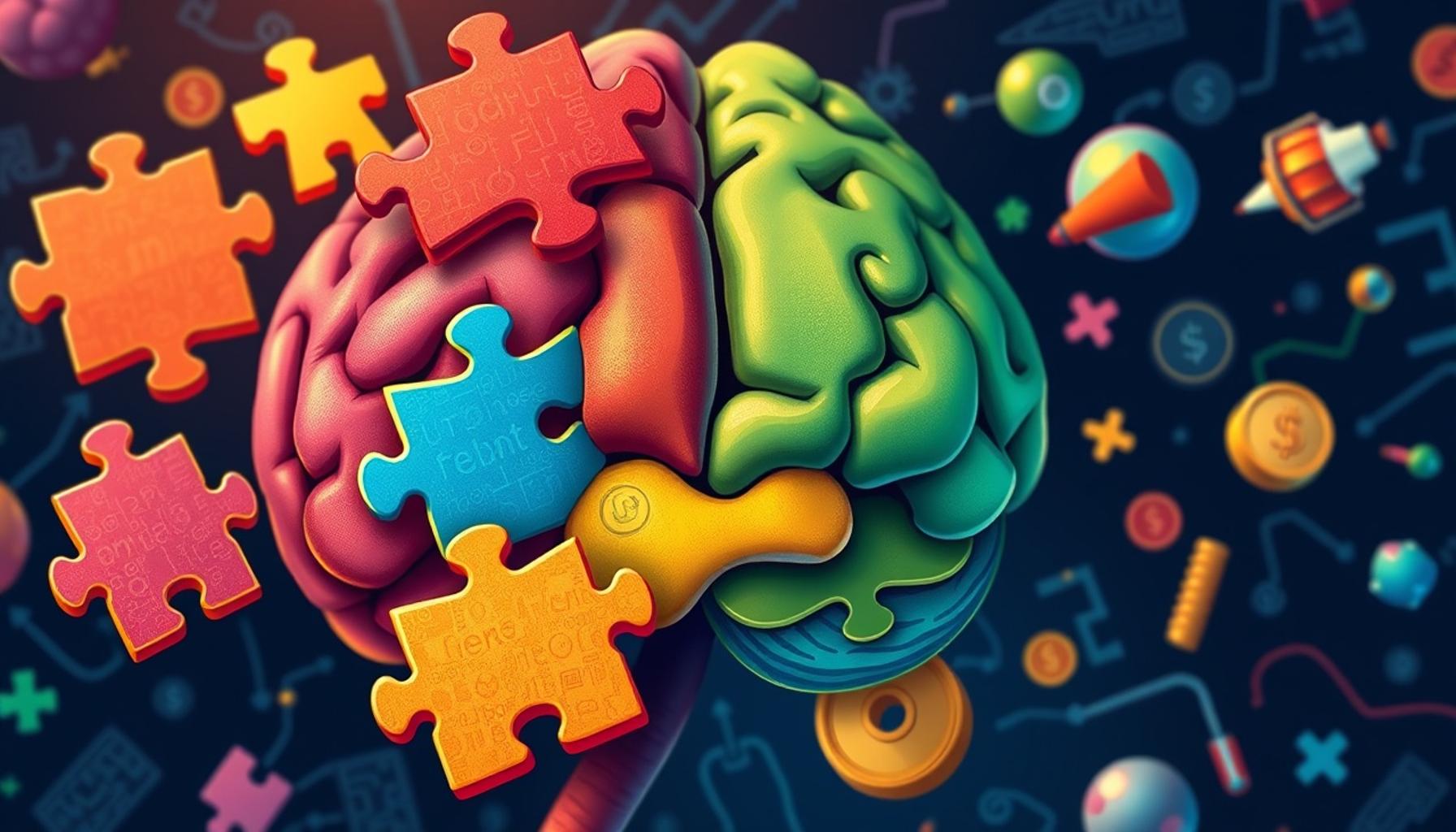
Puzzles and Intuition: The Role of Intuition in Solving Complex Challenges

Understanding the Nuances of Intuition
Intuition serves as an essential component in the decision-making process, often acting as our internal compass when navigating complex scenarios. This instinctive ability enables individuals to understand things without the need for explicit reasoning, relying instead on subconscious cues and past experiences. It is this blend of innate understanding and experiential knowledge that makes intuition crucial in both professional and personal contexts.
- Definition of Intuition: Intuition can be defined as a gut feeling or immediate understanding that occurs without the aid of analytical reasoning. This instinct is akin to an internal signal, warning or guiding us based on our previous experiences.
- Importance in Daily Life: In dynamic environments such as the bustling streets of cities or during high-stakes negotiations, our ability to make rapid decisions—a skill bolstered by intuition—is vital for effective responses. For instance, a salesperson might sense when a customer is hesitant, allowing them to adjust their pitch accordingly.
- Connection to Puzzles: Many intricate challenges—ranging from mathematical problems to relational conflicts—are not solely resolved through logic. Often, a sudden ‘aha’ moment arises, surprising the solver with a solution that seems to flow effortlessly from deep within.
Everyday situations provide ample opportunities to witness the power of intuition in action. For instance:
- A detective piecing together scattered clues may develop a hunch about a suspect’s guilt based on inconsistencies in their alibi, leading to breakthroughs in their investigation.
- In healthcare, a doctor might recognize a pattern in a patient’s symptoms that starkly deviates from common diagnoses, allowing them to identify rare conditions efficiently.
- Researchers often experience moments of clarity that drive academic breakthroughs, relying on intuitive insights as they sift through complex data in fields like neuroscience and quantum physics.
Investigating the intersection of intuition with cognitive processes has become a focal point for many researchers. Understanding how these inner intuitions operate can enhance our decision-making capabilities, particularly under conditions of ambiguity. For instance, studies have shown that experienced professionals often rely on their gut feelings for swift judgments, which can outperform analytical approaches in certain scenarios.
This exploration reveals how puzzles and intuition are intricately intertwined, emphasizing that harnessing intuitive faculties can significantly bolster our problem-solving skills. As we navigate this complex interplay between thought, emotion, and instinct, we uncover the hidden strategies that define effective decision-making. So, dive deeper into your own intuitive responses; they may lead you to answers that traditional reasoning cannot uncover.
DIVE DEEPER: Click here to discover more

The Mechanics of Intuition in Problem-Solving
The landscape of problem-solving is often fraught with complexity, where puzzles emerge in various forms—be it mathematical riddles, interpersonal dilemmas, or strategic business decisions. As we encounter these multifaceted challenges, our reliance on intuition becomes increasingly apparent. This reliance stems from a recognition that some problems defy straightforward analytical solutions. Instead, they require a deeper understanding that often materializes through intuitive processes.
To appreciate the role of intuition fully, it’s essential to break down how it functions during problem-solving. Intuition is not merely a mystical phenomenon; it’s grounded in cognitive science. Our brain constantly processes vast amounts of data, much of which occurs below the level of conscious awareness. This processing results in patterns that inform our decisions, even when we cannot articulate the reasoning behind them. Here are some critical aspects of how intuition facilitates the resolution of puzzles:
- Pattern Recognition: Experienced individuals in various fields, whether artists, mathematicians, or business leaders, tend to possess finely-tuned instincts for identifying patterns. This ability allows them to recognize familiar elements within chaotic information, enabling quick assessments and solutions.
- Emotional Intelligence: Intuition heavily intersects with emotional awareness. For instance, a negotiator may sense an unspoken tension in a meeting, guiding their approach without needing explicit verbal cues.
- Time Efficiency: In fast-paced environments, the speed at which one can analyze a situation is crucial. Intuition shortens the decision-making process by providing immediate insights, streamlining the path to resolution.
Scientists and psychologists have long delved into the mechanisms behind intuition. Research performed by cognitive psychologists, like Daniel Kahneman, has unveiled that our brains often default to intuitive judgments before applying analytical thinking. In his book “Thinking, Fast and Slow,” Kahneman distinguishes between two modes of thought: the rapid, instinctive system and the more deliberate and analytical system. The interplay between these systems shapes how we engage with puzzles: while the analytical system can provide comprehensive answers, it is often the intuitive system that triggers initial ideas that lead to solutions.
Consider the realm of competitive chess, where intuition plays a pivotal role. Grandmasters often rely on gut feelings derived from years of experience, allowing them to predict their opponent’s moves and identify winning strategies in a matter of seconds. Such instances highlight how intuition in puzzles integrates experience, perception, and instinct, often propelling players towards victories that may seem effortless to an outside observer.
Additionally, intuition forms a bridge between rational and emotional thinking. This balance is particularly vital when faced with intricate problems where logic might falter. By engaging our intuitive faculties, we open ourselves to innovative solutions that conventional analysis might overlook. Thus, fostering a deeper understanding of this synergy between intuition and cognitive reasoning can enrich our approach to tackling complex challenges, inviting us to look beyond surface-level explanations.
Delving deeper into the nature of intuition, we find it often manifests as an instinctual grasp of solutions, especially when facing intricate dilemmas. This phenomenon is especially prevalent in fields such as science, art, and business, where traditional problem-solving methods may not suffice. Research indicates that intuitive thinking can lead to insightful discoveries and innovative solutions, suggesting a profound connection between intuition and creative problem-solving.
Consider, for instance, renowned scientists who have successfully navigated complex challenges not solely through rigorous methodologies but also by trusting their gut feelings. Albert Einstein himself famously relied on intuition to formulate groundbreaking theories, demonstrating the power of harnessing instinct as a complementary approach to analytical reasoning.
Furthermore, in the realm of business, leaders often credit their success to intuitive decision-making during times of uncertainty. When data is sparse and time is of the essence, intuition can serve as a guiding compass, enabling leaders to make swift yet informed decisions that can ultimately steer their organizations toward thriving outcomes. This aspect of decision-making reveals the essential balance between logic and intuition in navigating complex challenges in today’s rapidly evolving landscape.
As we unravel the significance of intuition, it becomes crucial to examine the specific conditions under which intuitive insights arise. Factors such as experience, knowledge, and emotional intelligence play critical roles in honing one’s intuition. Thus, the cultivation of these skills can enhance an individual’s ability to perceive and solve problems more effectively, paving the way for new avenues of exploration and understanding.
| Intuitive Thinking | Key Benefits |
|---|---|
| Enhanced Creativity | Promotes innovative solutions to complex problems through subconscious processing. |
| Adaptability | Enables quicker decision-making in uncertain and dynamic environments, essential in crisis situations. |
In conclusion, grasping the dynamics of puzzles and the role of intuition can significantly transform the way we approach challenges in our personal and professional lives. By embracing intuitive insights, individuals and organizations stand to benefit from a more holistic approach to problem-solving.
DIVE DEEPER: Click here to learn about the science behind memory training
The Synergy of Intuition and Analytical Thinking
While the intricate workings of intuition play a vital role in solving hurdles, they’re even more powerful when combined with analytical thinking. This blend can lead to remarkable breakthroughs in various fields. Indeed, the most adept problem-solvers often do not rely solely on one approach; instead, they harness both intuition and analysis to delve deeper into challenges.
A striking example can be found in the world of scientific research. Take Albert Einstein, whose theories weren’t merely born from rigorous calculations but emerged from a profound intuitive understanding of the physical world. His thought experiments, like riding a beam of light, showcased how intuition can guide scientific inquiry. Similarly, modern researchers often use intuition to formulate hypotheses that are then rigorously tested through quantitative methods. This suggests that intuition not only provides initial ideas but also sets the stage for more comprehensive investigation.
Moreover, the domain of business strategy illustrates this interplay wonderfully. Leaders in technology, such as Elon Musk, have famously discussed the importance of “first principles thinking,” which advocates breaking down problems to their core truths. Here, intuition serves as a catalyst, enabling leaders to perceive potential market shifts or technological breakthroughs before they are evident to others—an ability that many recognize is crucial in today’s fast-evolving markets.
Additionally, puzzles often require a reboot of our mental frameworks. When faced with a particularly tricky challenge, stepping back and engaging in an unrelated task can stimulate intuitive thoughts. This phenomenon is backed by research suggesting that taking breaks can lead to the so-called “Aha!” moment, where insights emerge suddenly. For instance, many composers and artists report a surge in creativity during walks or mundane chores, drawing on these intuitive flashes to resolve creative dilemmas. This practice not only enhances creativity but encourages a flexible mindset, vital for problem-solving.
Furthermore, the role of intuition in teamwork cannot be overlooked. Groups that rely on a diverse range of intuitions—cultivating a culture of open dialogue and trust—often outperform those that rely on rigid protocols. A study by Google found that teams with high psychological safety, where members feel comfortable sharing their intuitions and ideas, were much more effective in problem-solving tasks than those without this supportive atmosphere. This highlights that ritualistic strategies may impede the unstructured creativity that leads to innovative solutions.
As we continue to navigate the complexities of modern life, it becomes crucial to recognize the opportunities presented by harnessing intuition alongside analytical reasoning. Acknowledging that their combination can unlock new pathways encourages adaptability and forward-thinking, attributes essential for addressing the unknowns of future challenges. Puzzles often become less daunting when we allow our intuition to guide us, leading to resolutions that are both innovative and effective.
DIVE DEEPER: Click here to enhance your focus
Conclusion
In the intricate landscape of modern problem-solving, the interplay of intuition and analytical thinking emerges as a crucial factor in navigating complex challenges. As shown through various examples across scientific research and business strategy, intuition acts as a guiding force, aiding in hypothesis formation and offering insights that may not immediately surface through sheer analysis alone. The examples of visionaries like Albert Einstein and Elon Musk illustrate how these cognitive approaches can stimulate groundbreaking advancements and foster innovation in their respective fields.
Moreover, the act of stepping away from a perplexing puzzle to engage in unrelated activities not only provides mental relief but also opens the door to intuitive epiphanies. This phenomenon of the “Aha!” moment reinforces the idea that creativity flourishes in environments that prioritize flexibility and allow for diverse perspectives. As evidenced by the findings from Google’s research, teams that embrace psychological safety encourage a richer exchange of ideas, leading to stronger collaborative problem-solving capabilities.
As we face increasingly complex challenges in an ever-evolving world, understanding the dual role of intuition and analytical reasoning becomes imperative. By recognizing and harnessing the strengths of both approaches, individuals and teams can cultivate a mindset that embraces adaptability, creativity, and forward-thinking solutions. In this way, the often-daunting puzzles of our lives transform into opportunities for insightful discoveries, paving the way for innovative resolutions that resonate well into the future.
Related posts:
Gamification of Puzzles: How to Turn Challenges into Learning Tools
Optimizing Critical Thinking: The Influence of Puzzles on Decision Making
Puzzles and Neuroplasticity: How Mental Challenges Can Reprogram the Brain
The Influence of Culture on the Creation and Resolution of Puzzles: A Comparative Study
The Art of Breaking Codes: Strategies for Solving Logic and Cipher Puzzles
Developing Cognitive Skills Through Puzzles: Benefits and Training Methods

Linda Carter is a writer and puzzle expert specializing in mind games, brain teasers, and cognitive challenges. With extensive experience helping individuals enhance their problem-solving skills and think critically, Linda shares her knowledge on our platform. Her goal is to empower readers with practical advice, engaging puzzles, and strategies to sharpen their minds and achieve success in the captivating world of mind games and puzzles.