Exploring Logic: Reasoning Challenges That Stimulate the Mind
Unlocking the Power of Reasoning
Logic is not just a tool; it’s a doorway into a world of critical thinking and problem-solving. Engaging with reasoning challenges sharpens our ability to analyze, deduce, and draw informed conclusions. These challenges not only exercise the mind but also enhance everyday decision-making skills, which are increasingly vital in a complex and fast-paced society.
Why Explore Logic?
In today’s fast-paced information landscape, characterized by an overwhelming influx of data, maintaining sharp analytical skills is paramount. Embracing reasoning challenges equips us with vital tools to navigate through this abundance of information. These challenges provide opportunities to:
- Enhance cognitive function: Engaging with logic puzzles and reasoning exercises can lead to improved memory and mental agility. Studies have shown that regular cognitive exercises may boost brain health and delay cognitive decline.
- Improve decision-making abilities: By practicing logical reasoning, individuals can develop a more structured approach to decision-making. For instance, professionals in fields like finance or healthcare often rely on logical deductions to make informed choices that affect investments or patient care.
- Stimulate creativity and innovation: Contrary to popular belief, logic and creativity are not mutually exclusive. Engaging in reasoning tasks can foster out-of-the-box thinking, leading to innovative solutions. Creative thinkers, such as artists and engineers, often use logic to refine their ideas into workable solutions.
Types of Reasoning Challenges
There is a plethora of logic puzzles and reasoning tasks available to invigorate your mind. Here are some popular types that can serve as mental workouts:
- Syllogisms: These are logical arguments that use deductive reasoning, where conclusions are drawn from two or more premises. For example, if all humans are mortal and Socrates is a human, then Socrates is mortal. Practices like these hone your ability to reason through premises to arrive at sound conclusions.
- Pattern Recognition: This involves identifying sequences and regularities in data. For instance, solving puzzles that require you to notice number sequences or visual patterns helps sharpen analytical skills and is frequently applied in data science and artificial intelligence.
- Riddles and Brain Teasers: These fun and quirky challenges require out-of-the-box thinking. A classic example is the riddle of the Sphinx, which poses a challenge requiring clever reasoning to solve, illustrating the joy and satisfaction that comes from solving logical puzzles.
As you delve deeper into the captivating world of logic, you’ll discover myriad ways to challenge your intellect and stimulate your mind. This journey into reasoning can lead to profound insights, better problem-solving abilities, and enhanced critical thinking skills. Whether you’re a student, a professional, or simply a curious individual, embracing reasoning challenges can enrich your everyday life and more importantly, open doors to new ways of thinking and understanding the world around you.
DIVE DEEPER: Click here to uncover more insights
Varieties of Logic: Expanding the Mind’s Horizons
Delving into the realm of logic offers a diverse array of reasoning challenges that not only captivate the mind but also enhance our analytical capabilities. These challenges vary widely, each with its unique approach to promoting critical thinking. From formal logic to informal reasoning, exploring these varieties can unveil new layers of cognitive understanding.
Formal Logic: The Foundation of Reasoning
At the core of logical reasoning lies formal logic, which encompasses systems of reasoning governed by strict rules. This is where established principles come into play, helping to frame arguments clearly and effectively. Engaging with formal logic can be immensely beneficial, as it allows individuals to:
- Understand Logical Connectives: Formal logic introduces connectives like conjunctions, disjunctions, and implications. Understanding how these elements interact helps individuals construct valid arguments and recognize fallacies in reasoning.
- Master Quantifiers: Grasping the use of universal and existential quantifiers such as “all,” “some,” and “none” enables a deeper understanding of argument structures, which is crucial for both academic pursuits and everyday reasoning.
- Build Arguments Systematically: Working through formal logic tasks encourages individuals to construct their arguments in a coherent manner, making it easier to communicate complex ideas effectively.
Informal Logic: The Real-World Application
While formal logic serves as an essential foundation, informal logic takes reasoning to the streets—addressing everyday arguments and discussions encountered in real life. Engaging with informal logic enhances our ability to:
- Evaluate Everyday Arguments: Informal logic focuses on arguments that appear in conversations and writings, allowing individuals to assess the strength of claims, weigh evidence, and understand underlying assumptions.
- Recognize Fallacies: One of the most vital aspects of informal logic involves recognizing common logical fallacies, such as strawman arguments or ad hominem attacks, thereby empowering individuals to defend their positions and respond to weaknesses in others’ arguments.
- Engage in Constructive Debate: Armed with an understanding of informal logic, you can navigate discussions with confidence, making reasoned contributions while fostering open dialogue.
Exploring both formal and informal logic cultivates a versatile reasoning toolkit, allowing individuals to approach problems from multiple angles. The beauty of these reasoning challenges lies in their ability to stimulate intellectual curiosity, urging individuals to think critically and independently. As you immerse yourself in these variations of logic, you’ll find that each step reveals new insights, empowering you to tackle challenges not just in academic settings, but also in everyday life. Logic is everywhere, and developing these skills can have profound implications, shaping how we understand ourselves and the world.
| Advantages | Benefits |
|---|---|
| Enhances Analytical Skills | Participants engage in complex problem-solving, sharpening their ability to analyze situations critically. |
| Stimulates Creative Thinking | Challenging puzzles encourage out-of-the-box thinking, allowing individuals to explore unique solutions. |
| Improves Decision-Making | Logic challenges train the mind to make quicker and more informed decisions under pressure. |
| Encourages Lifelong Learning | Engaging with logic and reasoning fosters an environment of continuous intellectual growth. |
Exploring Logic through reasoning challenges is not just an exercise; it is an invitation to rediscover your cognitive potential. Each puzzle conquered results not only in personal satisfaction but also in the development of essential skills applicable in daily life. In our rapidly changing world, honing these abilities is vital for both personal and professional success. These advantages make “Exploring Logic: Reasoning Challenges That Stimulate the Mind” a beneficial pursuit for anyone keen on enhancing their cognitive toolkit. As participants engage with various reasoning challenges, they find themselves not only entertained but also empowered by newfound abilities. This theme encourages the exploration of the mind’s vast potential, making it a valuable topic for readers inclined toward intellectual challenges.
EXPLORE MORE: Click here to learn about how logic puzzles enhance critical thinking
The Intersection of Logic and Creativity
While the study of logic often brings to mind rigid structures and defined methodologies, an emerging perspective reveals a fascinating intersection between logic and creativity. Engaging with reasoning challenges encourages not just systematic thinking, but also innovative problem-solving. This duality opens pathways for individuals to explore complex ideas and unexpected solutions in both academic and artistic realms.
Creative Problem Solving: Beyond Conventional Boundaries
Creative problem solving leans heavily on logical frameworks, yet it also invites out-of-the-box thinking. By harnessing logical principles alongside creativity, individuals can approach challenges that might seem insurmountable. For example:
- In Science and Technology: Engineers often employ logical reasoning to develop algorithms that solve complex problems, yet they must also think creatively to design innovative technologies. The intersection allows for breakthroughs that can change the trajectory of industries, such as artificial intelligence and renewable energy.
- In the Arts: Artists, musicians, and writers often grapple with logical constructs such as narrative structure and tonal balance. By understanding these frameworks, they can push boundaries, creating works that resonate on multiple levels and evoke strong emotions.
- In Business: Logically analyzing market trends allows businesses to make informed decisions. However, incorporating creative strategies can differentiate a brand in a saturated market, leading to new marketing campaigns that utilize humor or social issues to engage consumers.
This blend of logic and creativity is not often articulated clearly in educational settings, which can limit the potential for innovative thinkers. Programs designed to stimulate both reasoning skills and creative thought can provide students and professionals with a competitive edge, enhancing collaboration and driving innovation.
Logic Puzzles: Fun and Functional
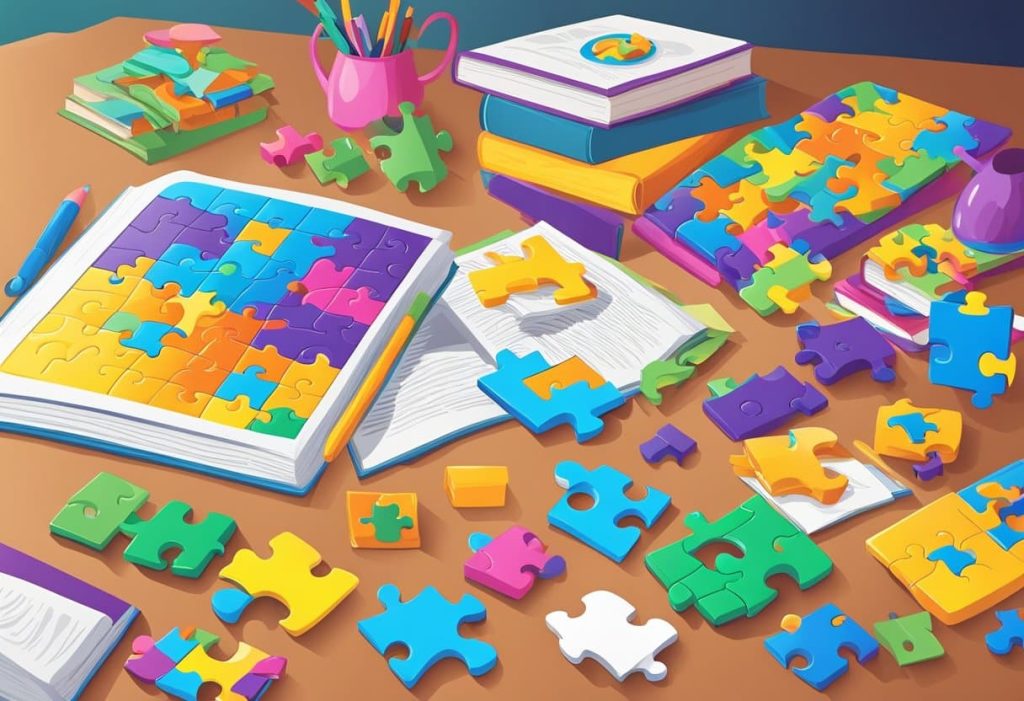
Another aspect to consider is the realm of logic puzzles. These puzzles, ranging from Sudoku to complex riddles, serve as not only entertaining diversions but also as effective tools for sharpening reasoning skills. Engaging with these puzzles fosters a variety of benefits, such as:
- Enhancing Problem-Solving Skills: Logic puzzles challenge the brain to adopt different approaches toward problem-solving, reinforcing flexible thinking and adaptability.
- Building Patience and Perseverance: Many puzzles require sustained focus and effort to unravel complex challenges, teaching the value of persistence and the joy of eventual success.
- Stimulating Cognitive Function: Research has indicated that regularly engaging in logic puzzles can enhance cognitive functions such as memory and processing speed, making them a beneficial pastime regardless of age.
Programs like escape rooms have popularized logic puzzles further by turning them into real-world experiences that require teamwork, quick thinking, and immediate application of logical skills. Participants must not only solve puzzles but also communicate effectively, highlighting the social aspect of logical reasoning.
By diving into the world of logic puzzles and exploring the ties between logic and creativity, individuals can unlock a broader range of cognitive abilities. Whether it’s through tackling a challenging riddle or reconstructing the rules of a game, these activities provide both enjoyment and measurable growth in reasoning skills. The dynamic interaction between logic and creativity cultivates an enriched mindset, equipping us to think critically in diverse contexts and engage with the complexities of our everyday lives.
DIVE DEEPER: Click here to discover more
Conclusion: Embracing the Power of Logic
As we have explored the intricate tapestry woven between logic and creativity, it becomes evident that reasoning challenges are not merely mental exercises but vital tools for nurturing a richer, more flexible mind. Engaging with logic puzzles and creative problem-solving techniques offers a dual advantage: it sharpens analytical skills while simultaneously igniting the imagination. In today’s fast-paced world, the ability to think critically and creatively is invaluable across all domains, from scientific innovation to artistic expression and business strategy.
Moreover, fostering an appreciation for logic and its intersection with creativity can transform educational environments. By integrating programs that promote both reasoning skills and creative thinking, we can cultivate a new generation of innovators and problem-solvers who are prepared to tackle complex challenges with originality and insight. This synthesis ultimately encourages collaboration and idea-sharing, enhancing our collective capability to navigate a world rich in nuance and contradiction.
In conclusion, exploring logic through reasoning challenges not only provides mental stimulation but also promotes a culture of creativity and exploration. Whether through logic puzzles, thought-provoking riddles, or imaginative problem-solving endeavors, individuals can unlock their cognitive potential and approach life with a more nuanced understanding. Embracing these challenges will not only lead to personal growth but also contribute to innovations that shape the future. Therefore, let us actively seek out these reasoning challenges, for they are gateways to a more insightful and adaptive way of thinking.
Related posts:
The Science Behind Logic Games: Cognitive Benefits and Solving Strategies
The Influence of Technology on Logic Games: Apps and Platforms that Transform Reasoning
Logical Challenges and the Psychology of Critical Thinking: How Puzzles Can Shape Our Decisions
Logical Challenges and Neuroscience: The Impact of Puzzles on Brain Development
Logical Challenges in Pop Culture: How Movies and Series Incorporate Reasoning Games
Logical Challenges for Everyone: How to Solve Puzzles and Improve Your Skills

Linda Carter is a writer and puzzle expert specializing in mind games, brain teasers, and cognitive challenges. With extensive experience helping individuals enhance their problem-solving skills and think critically, Linda shares her knowledge on our platform. Her goal is to empower readers with practical advice, engaging puzzles, and strategies to sharpen their minds and achieve success in the captivating world of mind games and puzzles.