Logical Challenges and Neuroscience: The Impact of Puzzles on Brain Development
Unlocking the Mind: The Intersection of Puzzles and Brain Growth
Every day, millions of people engage in activities that challenge their thinking and stimulate their brains. From crossword puzzles to Sudoku, logical challenges have become an integral part of our lives. But what does science say about the impact of these mental exercises on brain development? Engaging in puzzles or brain games has evolved from a simple pastime to an essential tool for cognitive enhancement.
Research in neuroscience highlights remarkable benefits associated with solving puzzles, suggesting that these activities go beyond mere entertainment. Consider the following effects:
- Enhanced Cognitive Function: Engaging in logical reasoning boosts memory and critical thinking. Studies have shown that regular puzzle solvers have improved memory retention, allowing them to recall information more efficiently. For instance, a 2013 study published in the journal “Neuropsychology” found that older adults who regularly engaged in puzzles scored higher on tests measuring cognitive function compared to those who did not.
- Improved Problem-Solving Skills: Puzzles teach effective strategies to approach complex issues. Solving a Sudoku puzzle, for example, requires an understanding of patterns and strategic foresight, skills that easily translate to real-world scenarios such as managing projects or making business decisions.
- Increased Neuroplasticity: Regularly challenging the brain supports the formation of new neural connections. The brain’s ability to reorganize itself by forming new connections is crucial for learning and adaptation. Engaging with puzzles helps to promote this ability, potentially shielding against the cognitive decline often associated with aging.
In the United States, educational institutions are increasingly incorporating puzzles into learning programs. This trend emphasizes the importance of mental exercise for all ages, particularly for cognitive development in children. Many schools utilize logic-based activities to enhance subjects like math and language, reinforcing how playful learning can be effective in enhancing student engagement and retention.
Delving into the world of logical challenges reveals intricate layers of complexity and understanding. The appeal of puzzles stretches beyond age and background; they unite people across generations in a shared quest for mental stimulation. As we explore the connection between puzzle-solving and brain development, we uncover a captivating narrative that invites further investigation. Are there additional implications for cognitive health as we navigate a world filled with challenges? Engaging with puzzles may just lead to a sharper mind and a more creative outlook on life.
This exploration not only enriches our appreciation for logic and reasoning but also empowers individuals to explore new avenues of mental fitness. Whether it’s during a morning commute or as a wind-down activity before bed, incorporating puzzles into daily routines could prove remarkably beneficial.
DISCOVER MORE: Click here to enhance your child’s problem-solving skills
The Cognitive Benefits of Puzzles: Unlocking Potential
The relationship between logical challenges and cognitive enhancement is a topic that has garnered significant attention in the field of neuroscience. Puzzles provide a unique blend of entertainment and stimulus that engages the mind in multi-faceted ways. A wealth of studies indicates that the act of puzzle-solving can have lasting effects on brain function, leading to a deeper understanding of cognitive health across different age groups.
One of the most compelling aspects of engaging in puzzles is the way they promote critical thinking. Logic puzzles require solvers to analyze information, identify patterns, and think creatively. In a study conducted by the American Psychological Association, researchers discovered that participants who regularly engaged in logical games demonstrated significantly improved abstract reasoning skills. Such cognitive engagement fosters a sense of mental agility that can be beneficial in everyday decision-making. This improvement in abstract reasoning not only enhances academic performance but also equips individuals with the mental tools necessary to confront real-life challenges in inventive ways.
Moreover, as individuals engage with various types of puzzles, they experience enhanced memory function. This is crucial as memory is the cornerstone of learning and knowledge retention. A comprehensive meta-analysis published in the journal “Memory & Cognition” found that individuals who routinely participated in memory tasks—like crossword or jigsaw puzzles—showed marked improvements in verbal and visual memory. This effect is even observable among older adults, reversing some of the cognitive decline traditionally associated with aging. The implications of this research suggest that stimulating the brain through puzzle-solving can act as a protective factor in maintaining cognitive health over time.
Challenges such as crosswords, Sudoku, logic grids, and even strategy-based games engage different cognitive faculties, enhancing neuroplasticity—the brain’s remarkable ability to reorganize itself by forming new neural connections. Through consistent engagement in brain games, individuals can foster a resilient neural network, which aids in adapting to stressors and complex problem-solving scenarios. This reorganization is critical for learning and memory, creating a feedback loop that enhances one’s intellectual capabilities.
Many teaching methods across the United States have begun to integrate puzzles as part of their educational framework, recognizing their significant role in cognitive development. Schools implement logic games to reinforce mathematical and linguistic skills, transforming traditional learning into engaging, interactive sessions that resonate with students. This rich integration into academic discourse highlights a progressive understanding of the importance of playful learning.
Walking through the vibrant landscape of puzzle-solving reveals profound connections to cognitive health and development. Whether in classrooms or living rooms, the ubiquitous presence of logical challenges invites learners of all ages to engage their minds while delving into realms of creativity and reasoning. In an era where mental acuity is paramount, the ongoing exploration of the impacts of puzzles on brain development continues to inspire researchers and enthusiasts alike.
| Advantage | Description |
|---|---|
| Cognitive Skills Enhancement | Puzzles stimulate problem-solving abilities and enhance critical thinking skills, leading to improved cognitive flexibility. |
| Memory Improvement | Engaging in logical challenges can strengthen memory function by promoting both short-term and long-term recall capabilities. |
When we delve into the realm of logical challenges and their connection to neuroscience, it’s clear that the brain’s plasticity allows for significant growth through stimulation. Engaging in puzzles not only maintains cognitive vigor but also encourages the brain to form new neural connections. This flexibility can be particularly beneficial in various developmental stages, especially in childhood and later adulthood.Recent research shows that children who frequently engage in puzzles exhibit a marked improvement in spatial reasoning skills, which are vital for subjects like mathematics and science. Similarly, adults participating in puzzle-solving activities have reported better mental acuity and a slower decline in cognitive functioning. It’s fascinating how the simple act of piecing together a puzzle can be a robust tool for enhancing mental performance across various age groups. The potential for these exercises extends beyond merely entertaining; they play a pivotal role in fostering a resilient brain capable of navigating daily challenges, both simple and complex. Thus, the intersection between logical challenges and brain development is not just intriguing but also grounded in solid scientific exploration.
DIVE DEEPER: Click here to uncover the benefits of crosswords
The Brain’s Reward System: Motivation Through Puzzles
Another intriguing dimension of the relationship between logical challenges and neuroscience involves the brain’s reward system. The act of solving a puzzle triggers the release of neurotransmitters such as dopamine, which plays a crucial role in motivating behavior and reinforcing learning. This biochemical response provides an immediate sense of satisfaction and reward upon completion, encouraging continued engagement in puzzle-related activities. Studies published in the journal “Cognitive Neuroscience” have shown that individuals who frequently challenge themselves with puzzles experience heightened levels of motivation, which not only boosts cognitive performance but also contributes to emotional well-being.
Moreover, understanding the impact of logical challenges on the brain’s reward mechanisms opens doors to exploring their therapeutic potential. Programs integrating puzzle-solving into mental health initiatives have shown promising results in reducing symptoms of anxiety and depression. Research conducted by the University of California highlights that patients engaged in puzzle-solving activities reported lower stress levels and increased feelings of achievement. This indicates that puzzles can serve as a constructive outlet, enhancing mental resilience while fostering a positive emotional state.
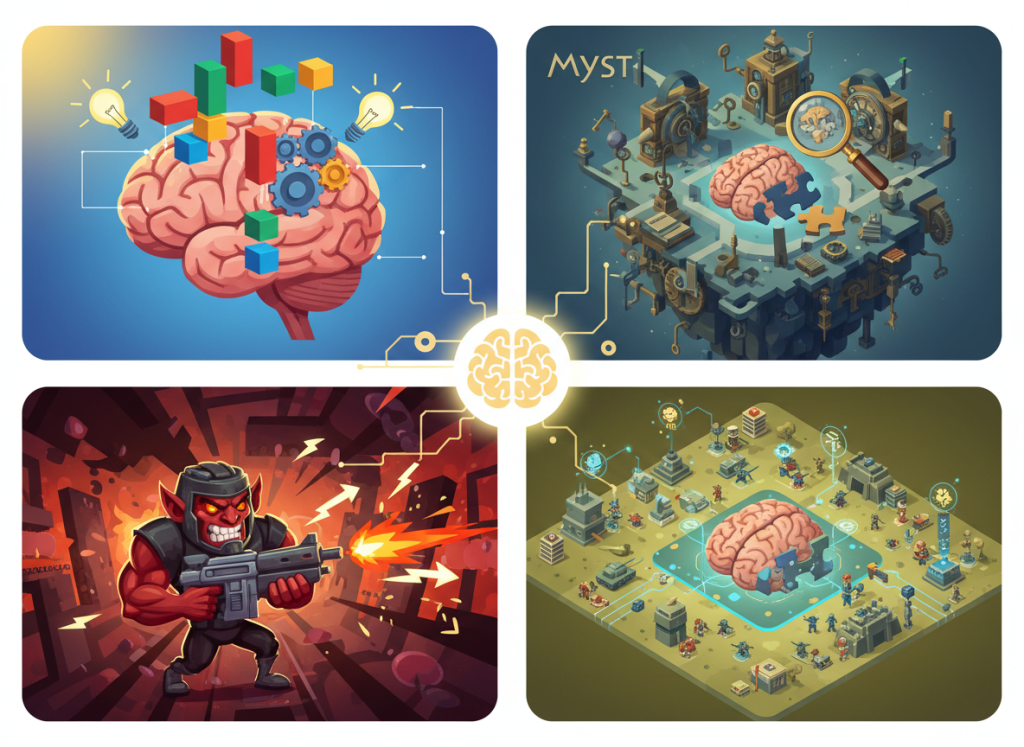
The flexibility and variety of puzzles available today, from digital games to traditional board games, add another layer to their cognitive impact. Video games that incorporate logic-based challenges are particularly noteworthy. Many of these games incorporate elements designed to stimulate critical thinking and strategy. For instance, games such as “Portal” or “The Witness” require players to explore environments filled with intricate puzzles that necessitate lateral thinking and problem-solving skills. Research suggests that such immersive experiences can lead to improved cognitive flexibility and spatial awareness, two crucial attributes for complex problem-solving.
Extended engagement with these logical challenges can result in the development of essential life skills. The social component of solving puzzles, whether in pairs or groups, has been recognized for fostering communication and collaboration skills. This interaction not only enhances cognitive functions but also builds social bonds, leading to a more supportive learning environment. In educational settings, group puzzles can serve as a dynamic tool for developing teamwork skills and empathy, allowing participants to see perspectives different from their own and adapt their strategies accordingly.
Furthermore, examining the role of culture in puzzle-solving provides an essential context. Traditionally, various cultural practices employ games and puzzles as methods of teaching problem-solving and logic. For example, in many Japanese schools, solving complex Sudoku puzzles is a common activity that aids in strengthening students’ analytical capabilities. By assimilating these puzzle-solving strategies into educational curricula across the United States, educators recognize not only the cognitive benefits but also the social and cultural significance of such activities.
The evolving landscape of puzzles continues to be a fertile ground for ongoing research. With new studies emerging that investigate the multifaceted relationship between puzzles, brain development, and cognitive health, the interplay between leisure activities and serious academic benefit remains a rich area of inquiry. As puzzles evolve into a more integral part of both educational frameworks and mental health strategies, they reinforce the understanding that fostering a stimulating environment through logical challenges is key to unlocking the full potential of the human brain.
DISCOVER MORE: Click here to learn about the evolution of logical challenges
Conclusion: Unlocking Cognitive Potential Through Puzzles
In conclusion, the intricate relationship between logical challenges and neuroscience underscores the profound impact that puzzles can have on brain development and cognitive health. As we have explored, engaging with puzzles fosters both cognitive flexibility and emotional resilience, enhancing not only critical thinking skills but also social interaction through collaborative problem-solving. The intricate dance of brain chemistry during puzzle-solving—marked by the release of dopamine—serves to motivate individuals, creating a compelling reason to incorporate these challenges into daily routines.
Furthermore, the therapeutic potential of puzzle-solving in alleviating symptoms of anxiety and depression is a promising area of research, suggesting that such activities can contribute to a holistic approach to mental well-being. As educators incorporate logical challenges into curricula, they not only cultivate analytical abilities but also honor the cultural traditions of learning embedded in games and puzzles.
As research continues to unfold, the evolving landscape of puzzles presents an exciting frontier for both cognitive science and psychological health. The findings indicate that integrating logical challenges into various aspects of life—whether through board games, video games, or group activities—can significantly improve our cognitive capacity while enriching our emotional experiences. Embracing these engaging tools is essential not just for academic success, but for nurturing a generation of thinkers equipped to face the complexities of the modern world. It’s time to recognize that puzzles are not merely pastimes; they are gateways to unlocking the full potential of the human brain.
Related posts:
Unraveling the Mysteries of Logic Games: The History and Evolution of Mental Challenges
Group Logic Challenges: How to Work as a Team to Solve Complex Puzzles
Logical Challenges for Everyone: How to Solve Puzzles and Improve Your Skills
Logical Challenges and Learning: Using Games to Teach Mathematical and Rational Concepts
The Art of Creating Logical Challenges: Tips for Game and Puzzle Designers
The Science Behind Logic Games: Cognitive Benefits and Solving Strategies

Linda Carter is a writer and puzzle expert specializing in mind games, brain teasers, and cognitive challenges. With extensive experience helping individuals enhance their problem-solving skills and think critically, Linda shares her knowledge on our platform. Her goal is to empower readers with practical advice, engaging puzzles, and strategies to sharpen their minds and achieve success in the captivating world of mind games and puzzles.